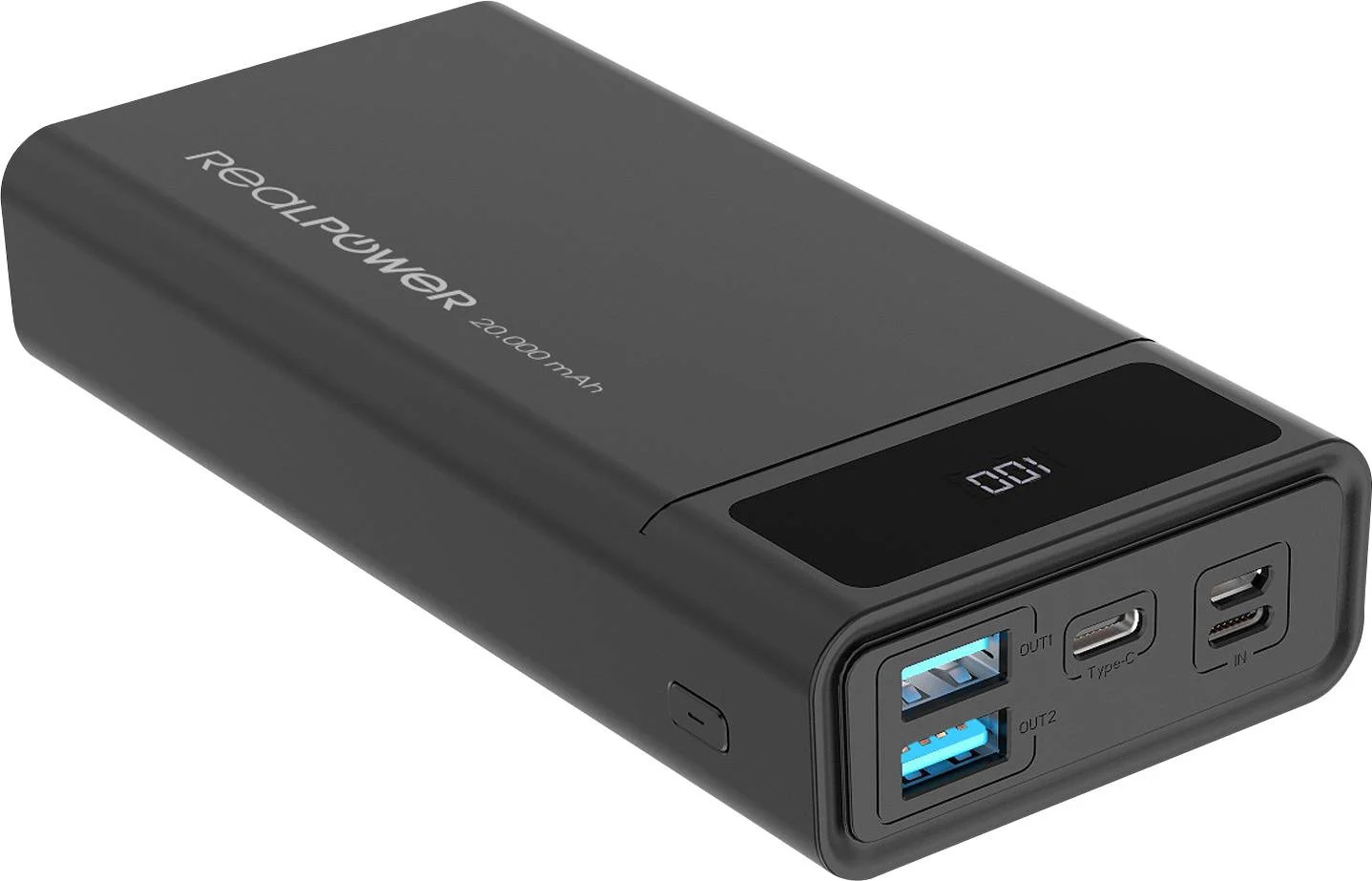
A 20000 mAh power bank is a portable charger with a 20000 milliampere-hour battery capacity, designed to recharge smartphones, tablets, and other USB devices multiple times before needing a wall outlet. In practical terms, this capacity translates to roughly 4-6 full smartphone charges, making it the sweet spot for travelers and heavy users who need reliable power away from home.
What is a 20000 mAh power bank?
A 20000 mAh power bank is a high-capacity external battery pack that stores electrical energy in a lithium-ion or lithium-polymer cell. The "mAh" (milliampere-hour) rating tells you how much charge the battery can hold, in this case, 20000 milliampere-hours. This rating is the headline spec because it determines how many times you can top up your devices before the power bank itself needs recharging. Unlike smaller 5000 or 10000 mAh units, a 20000 mAh power bank is designed for multi-day trips, long commutes, or charging multiple gadgets simultaneously without hunting for an outlet.
How a 20000 mAh power bank actually works
Inside the casing, a 20000 mAh power bank contains a lithium-ion battery pack rated at a nominal voltage of 3.7V. When you plug in your phone, the power bank's internal circuitry boosts that voltage to 5V (the USB standard), or higher if it supports fast charging protocols like Qualcomm Quick Charge or USB Power Delivery. This voltage conversion is not 100% efficient. Due to voltage conversion to 5V (or higher for fast charging) and energy loss from heat and circuit inefficiencies, the actual usable capacity is typically 60% to 70% (12000mAh to 14000mAh) of the rated capacity. So, while the label says 20000 mAh, the energy your phone actually receives is closer to 12000-14000 mAh. This is why real-world charge counts are always lower than simple math would suggest.
Real-world capacity: how many charges you actually get
Let’s set realistic expectations. With the 60-70% usable energy from a 20000 mAh power bank, you’re working with 12000-14000 mAh of actual output. That means:
If you’re a heavy user who streams video, games, or uses GPS navigation, expect closer to 3-4 phone charges because those activities drain your phone faster while it’s plugged in. The 20000 mAh rating is a theoretical maximum, not a promise of 20000 mAh delivered to your device.
Are 20000 mAh power banks allowed on flights?
Yes, 20000 mAh power banks are generally allowed in carry-on luggage but are prohibited in checked baggage due to the fire risk associated with lithium-ion batteries. Airlines regulate batteries by Watt-hours (Wh), not mAh alone; a typical 20000 mAh power bank (rated at 3.7V) equals approximately 74Wh, which is within the common 100Wh limit for carry-on baggage without special approval. However, there’s a common misconception: not all 20000 mAh power banks are guaranteed to be TSA-allowed; always confirm the Watt-hour (Wh) rating printed on the device, as some units might exceed the 100Wh limit due to different cell voltages. Before you fly, flip the power bank over and look for the Wh number, if it’s 100Wh or less, you’re cleared for carry-on. If it’s above 100Wh, you’ll need airline approval, and if it’s above 160Wh, it’s banned entirely.
Advantages of a 20000 mAh power bank
The biggest advantage is raw capacity: you can charge a smartphone 4-6 times, a tablet 1-2 times, or mix and match devices over a weekend trip without touching a wall charger. This makes it ideal for long flights, camping, festivals, or power outages. Portability is still reasonable, most 20000 mAh units weigh between 350g and 500g and fit in a backpack side pocket. Multiple USB ports (usually 2-3) let you charge a phone and a pair of earbuds simultaneously, and many models support fast charging at 18W or 20W. Finally, it doubles as an emergency power source for critical devices like a CPAP machine or a portable fan during a blackout. For anyone who relies on their devices for work, navigation, or safety, a 20000 mAh power bank is the difference between a dead phone and a productive day.
Factors to consider when choosing a 20000 mAh power bank
Not all 20000 mAh power banks are created equal. Here’s what to check before buying:
- Brand quality: Stick with reputable names (Anker, RAVPower, Samsung, Belkin) that use genuine lithium-ion cells and include safety certifications (CE, FCC, UL). Cheap no-name brands often overstate capacity and lack overcharge protection.
- Number of ports: Look for at least 2 USB-A ports and 1 USB-C port. If you need to charge a laptop, make sure the USB-C port supports Power Delivery (PD) at 30W or higher.
- Charging speed (input/output amps): Output amps determine how fast your devices charge, 2.4A per port is standard, but 3A or 5A (with PD) is faster. Input amps matter too: a 2A input recharges the power bank in about 10-12 hours, while a 3A input (USB-C PD) can cut that to 6-8 hours.
- Size and weight: A 20000 mAh power bank is heavier than a 10000 mAh unit. If you carry it in a pocket daily, look for a slim design under 450g. If it’s for a backpack, weight is less critical.
- Additional features: LED indicators for remaining battery level, built-in cables (lightning/USB-C), wireless charging pads, and a flashlight are nice-to-haves. Just remember each extra feature adds bulk and cost.
Price is a factor too, expect to pay $30, $60 for a quality 20000 mAh unit. Don’t sacrifice safety for a $15 bargain; a faulty battery can damage your devices or, in rare cases, catch fire.
Tips for extending your power bank's battery life
To keep your 20000 mAh power bank performing at its best for years, follow these maintenance practices:
- Charge it regularly: Even if you don’t use it, recharge the power bank every 3 months. Lithium-ion batteries degrade when stored fully drained.
- Avoid extreme temperatures: Don’t leave it in a hot car or in freezing weather.
- Use the correct charger: Match the input amperage to the manufacturer’s spec. A 1A charger will take forever; a 5A charger (if not supported) can stress the battery.
- Disconnect after full charge: Once your phone hits 100%, unplug it. Leaving it connected keeps the power bank’s circuitry active and wastes a small amount of energy.
- Store properly: Keep it in a dry, dust-free place.
By treating your power bank with care, you’ll get hundreds of charge cycles before the internal battery degrades to 80% of its original capacity.
\nRelated reading: Why Does My Tablet Flicker, Why Is My Tablet Screen Black, and Why Is My Tablet Charging So Slowly.