You sign up for a free coupon, grab a week-long app trial, or download a PDF guide. Three days later, your inbox looks like a recycling bin after a storm. This is not bad luck. It is a predictable chain reaction, and it starts the moment you hand over your real email address to a website that has little reason to guard it. The fix is simpler than most people expect, and it does not require any technical skills to apply.
Your Inbox, Under New Management
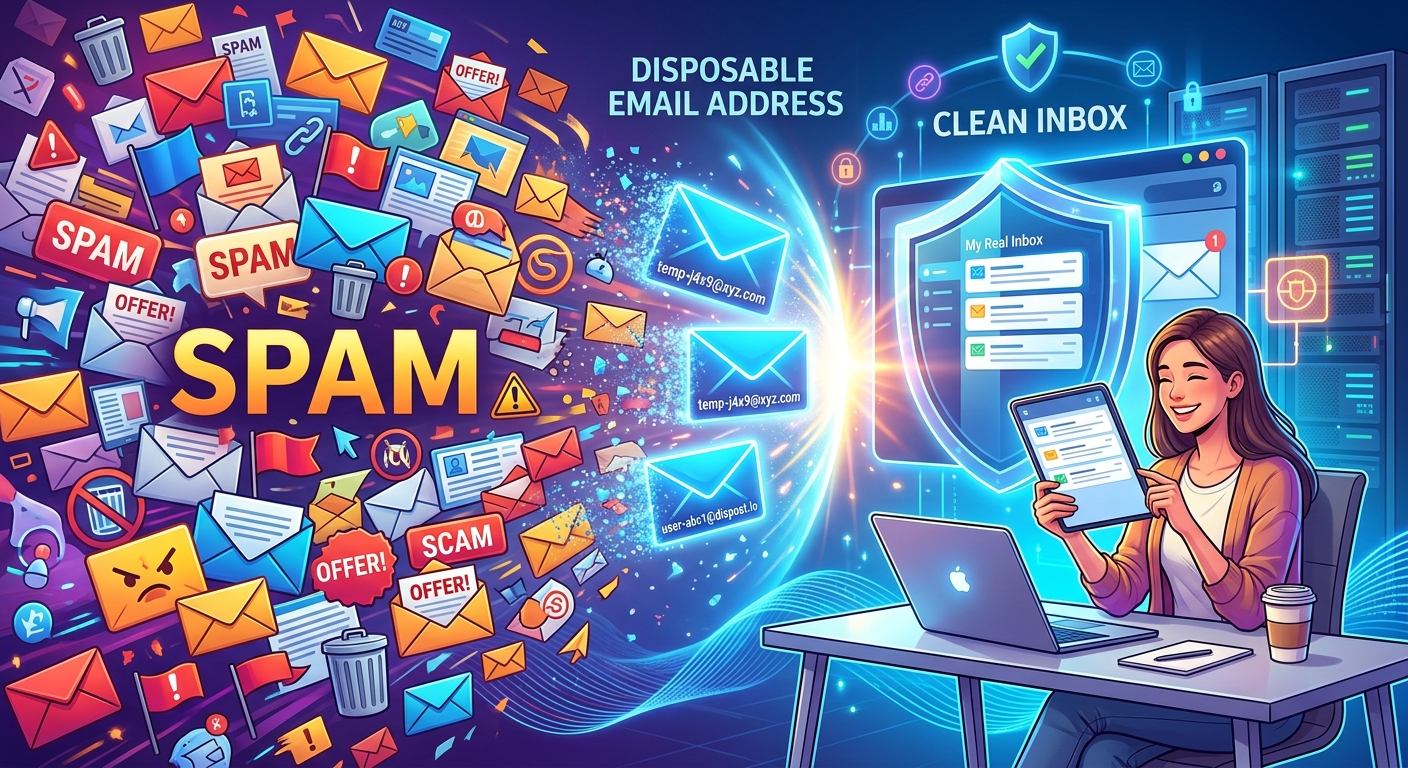
Most people share their real email address with every website they sign up for, never thinking twice about where it ends up. That address then travels far beyond the original signup, landing in marketing lists, third-party databases, and eventually the hands of bulk senders. A disposable email address breaks this chain at the source. It receives the confirmation you need, absorbs whatever junk arrives afterward, and leaves your main inbox clean, useful, and genuinely yours.
The Moment You Share Your Email, the Clock Starts
Think about the last time you signed up for something online. Maybe it was a discount code, a free ebook, or a streaming trial. You typed your email into the form and hit submit. That address entered a system you have almost no control over.
Most websites carry a privacy policy with a clause about sharing data with "trusted partners." That phrase can stretch to cover a surprising range of recipients. Advertising networks, coupon aggregators, market research firms, and data brokers can all qualify under that umbrella. Within days of a signup, your address may already sit in several external databases you have never heard of.
Data brokers are companies that collect, bundle, and resell personal information. Email addresses are among the most valuable records they trade. A single signup on one site can lead to your address appearing in dozens of marketing lists within weeks. This is not a rare edge case. It is the ordinary mechanics of how the email marketing industry operates at scale.
The result is the bloated, noisy inbox that most people have come to accept as normal. But normal does not mean inevitable.
Why Clicking Unsubscribe Rarely Solves the Problem
The instinct to unsubscribe from unwanted messages makes sense on the surface. The trouble is that unsubscribing only works with the specific sender whose message you are reading. If your address has been resold to thirty different marketing lists, you face thirty separate unsubscribe processes, each with its own flow and timeline.
There is another complication. Some senders use unsubscribe clicks to confirm that an address belongs to an active user. A click tells them a real person is checking that inbox. That information can make you a more attractive target rather than a less attractive one, pushing more messages your way instead of fewer.
Legitimate companies in the United States must follow rules governing commercial email, including the requirement to honor opt-out requests within ten business days. But enforcement has real limits, and a significant portion of the spam reaching your inbox comes from senders who operate entirely outside those obligations.
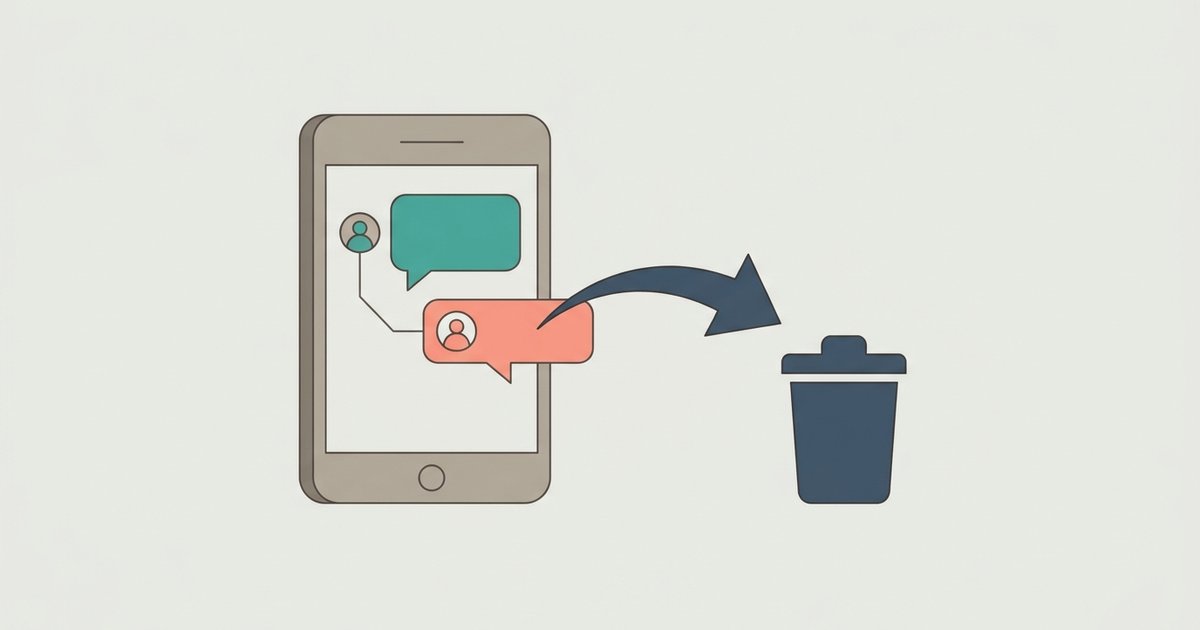
Unsubscribing is a reaction to a problem that has already arrived. A disposable address stops it from arriving in the first place.
What a Disposable Email Address Actually Does
A disposable email address is a temporary inbox you create specifically for a single signup. You use it to receive a verification or confirmation message, grab whatever link or code you need, and then walk away. Any follow-up email, whether it is a newsletter, a promotional drip campaign, or outright spam, goes to that address instead of your real one.
Most services that provide disposable addresses require no registration from you. You visit the site, an address appears, and you use it immediately. Some let the address expire after a short window. Others keep it available until you close the tab or navigate away. Either way, your primary inbox never sees what comes next.
The process is straightforward. You copy the temporary address, paste it into the signup form on whatever site you are using, and then check the temporary inbox for your confirmation link. That is the complete workflow. Because these addresses are fully separate from your real account, there is nothing to configure or maintain. If the address fills with junk, it does not matter. That is exactly what it was built to absorb.
Finding the Right Tool for Short-Lived Signups
Several services have built solid reputations for offering temporary inboxes that work reliably. They vary in how long an address stays active and whether they offer features like attachment support or message forwarding. For most everyday situations, dependability matters most: the confirmation email needs to arrive before the address expires.
For signups where you expect activity over several days, some services offer longer-lasting aliases that stay active through a full onboarding sequence. These are useful for free trials that spread messages across the first week of your access period.
For situations where you need a working address for only a few minutes, 5 minute mail is a dependable go-to. The concept is minimal: you get a temporary inbox that lives just long enough to receive one confirmation, and then it disappears. No account creation, no password to remember, no data trail that lingers. For a coupon code, a gated download, or a free trial activation, this kind of service gives you exactly what you need and nothing you do not.
The range of available services means you can match the duration to the situation. A short window for a one-time code. A few days for a trial with multiple onboarding messages. Neither option touches your real address at any point in the process.
When Your Real Address Is the Right Choice
Disposable addresses are not a universal replacement for your actual inbox. There are plenty of cases where using your real email makes sense, and where a throwaway address would create problems down the line.
Banking and financial services need a reliable channel to reach you for security alerts, transaction confirmations, and account recovery. If you use a temporary address and it expires, you may lose access to your account permanently. Healthcare portals, insurance platforms, and government services carry the same requirement. These are long-term relationships built on stable, ongoing communication.
Subscription services you actively pay for also belong in your real inbox. You want receipts, renewal reminders, and support responses going somewhere you genuinely check. The same applies to any platform where you have accumulated lasting value, whether that is your primary creative tools, professional software, or services tied to your billing information.
Workplaces, academic institutions, and official organizations are clear cases for your real address as well. Any signup that ties to your identity or requires ongoing verification should use your actual inbox, not a temporary one.
The distinction is intuitive once you frame it clearly: if you need the relationship to last, use your real address. If the connection is brief and transactional, a disposable one fits far better.
A Simple Framework for Choosing Before Every Signup
The decision becomes much easier with a short mental checklist you can run through before typing your email anywhere. Ask yourself three things. Do you expect ongoing, meaningful communication from this service? Would it cause a real problem if this address stopped working in a week or two? Is this a platform where your account carries lasting value or connects to your real identity?
If all three answers are yes, your real address is the right call. If any answer is no, a disposable inbox is the better fit.
Over time this thinking becomes automatic. You develop an instinct for what kind of signup you are looking at. A coupon site, a free template download, a webinar registration, a trial for an app you found through an ad, a one-time account to access a gated article. These are disposable address situations. A new bank account, a health tracking app, a subscription you plan to keep, a work platform tied to your professional identity. These are real address situations.
The habit takes only a few weeks to solidify. After applying this approach consistently, reaching for a temporary inbox before the right kind of signup starts to feel as natural as locking the front door before you leave the house.
The Version of Your Inbox You Actually Deserve
Your email inbox is one of the most frequently visited places in your digital life. You check it multiple times a day across multiple devices. When it is full of noise, every visit carries a small but persistent frustration. You miss things that matter, ignore messages you should have read, or spend minutes deleting content you never asked to receive.
Disposable email addresses remove a large source of that noise before it ever arrives. Instead of dealing with the consequences of a careless signup months later, you stop the junk from entering your inbox in the first place. The cumulative time saved over a year is more significant than most people expect when they first try the habit.
There is no complex setup involved. No software to install. No subscription required. The tools that make this possible are free, accessible from any browser, and take only seconds to use. The only change is one small decision you make before typing your email into a form: is this worth my real address?
Answering that question correctly, each time, is the entire habit. And once it takes hold, your inbox starts looking the way it always should have.