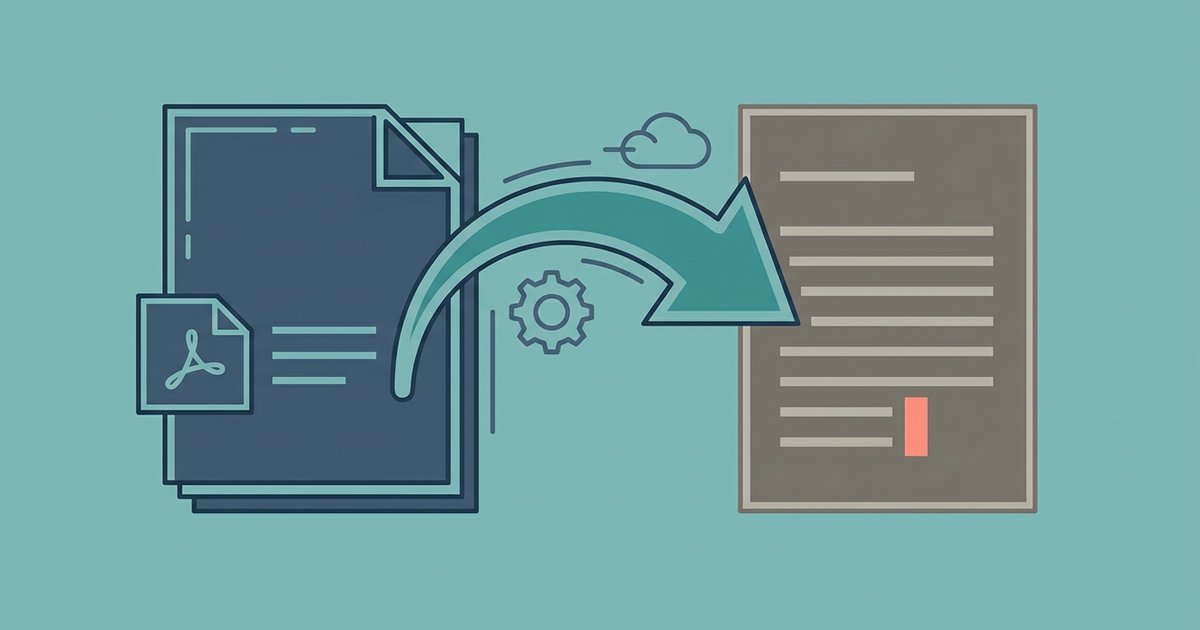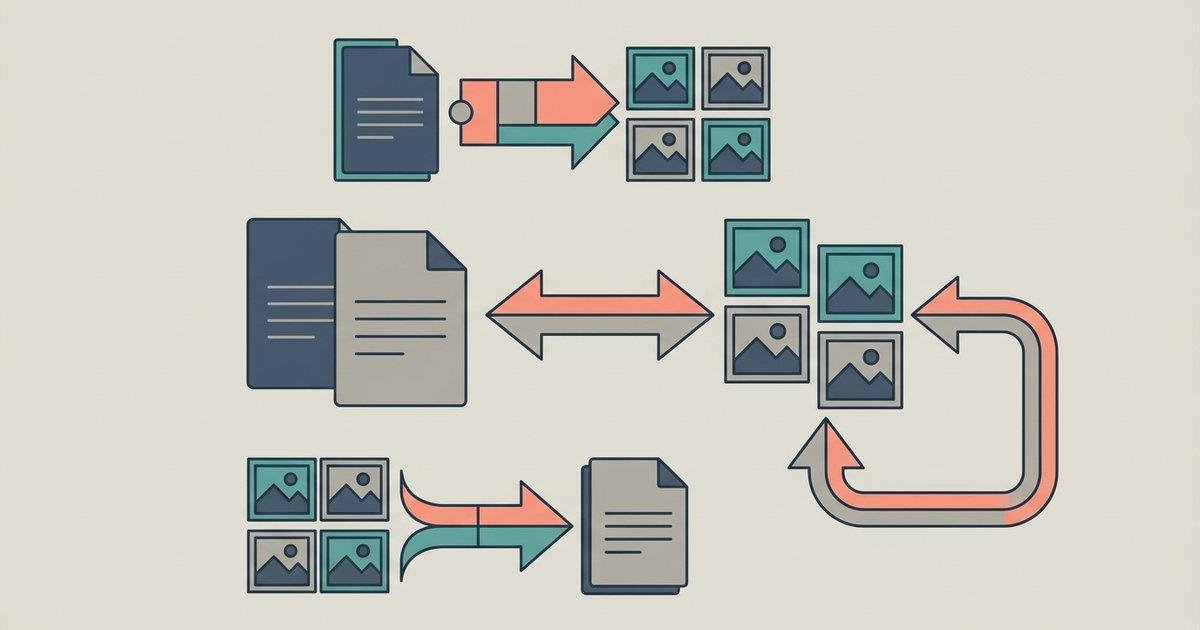
To convert PDF to JPG, upload the PDF to a converter that renders each page as an image, then download the images, usually as a ZIP with one JPG per page. To convert JPG to PDF, upload your photos, put them in order and download a single PDF. Both directions take seconds in a browser, and Macs and phones have built-in options for simple cases.
The one thing to understand before you start is that a JPG is a picture. Once a page becomes an image, the text on it can no longer be selected, searched or edited.
Convert PDF to JPG with PDFBEAR
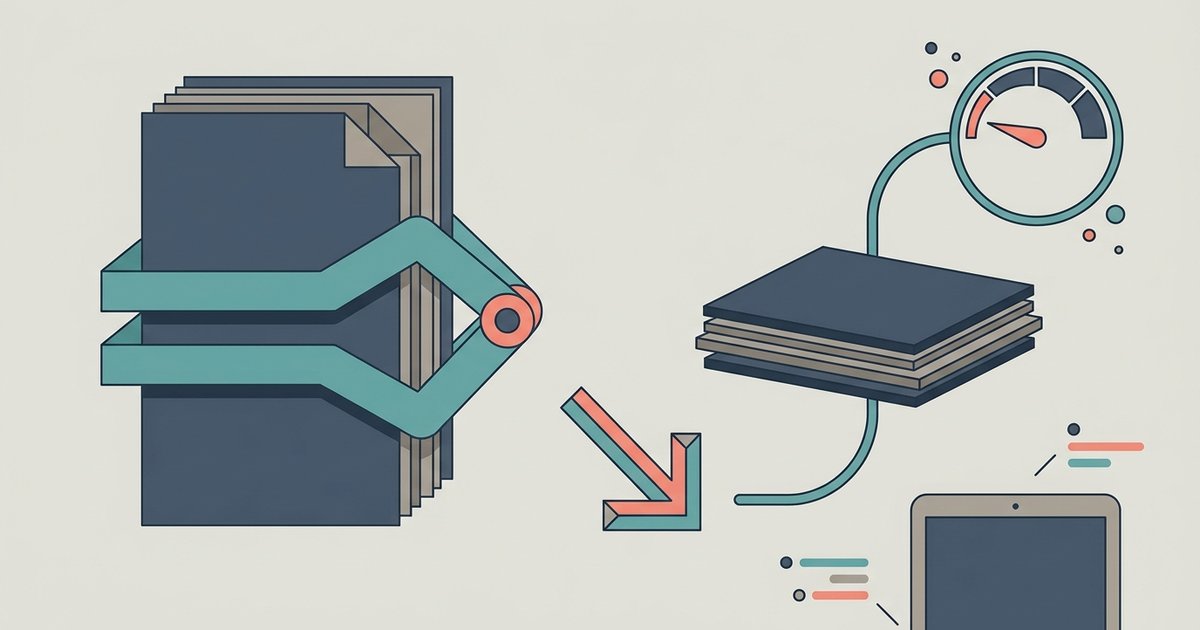
The recommended tool is PDFBEAR's PDF to JPG converter. It renders every page of the PDF as its own JPG and delivers them together in a ZIP archive, in the original page order. The site states that it is free with no account required for basic use, though guests have a daily file limit, and takes files up to 50 MB. To convert PDF to JPG online with PDFBEAR:
- Open the PDF to JPG page and upload your PDF.
- Check the page thumbnails. You can drag pages into a different order before converting.
- Click Convert to JPG.
- Download the ZIP file from the result page and unzip it to get one image per page.
In a test with a standard letter-size page, each JPG came out at 1700 by 2200 pixels, which is sharp enough for a screen, a slide or a social post. If you only need one page, delete the others first or pick the page you want out of the ZIP afterward.
The site lists some sensible limits. JPG does not support transparency, so transparent areas are flattened onto a solid background, and very small text can soften slightly because JPG compression is lossy. If you need crisp text or a transparent background, PDFBEAR also has a PDF to PNG tool that works the same way. Free downloads can wait briefly in a queue, and guests have a small daily allowance that a free account removes.
Convert JPG to PDF with PDFBEAR
For the reverse job, PDFBEAR has a JPG to PDF tool on the same site under the same free terms. After you upload one or more images, it offers these options:
- Page orientation: portrait or landscape.
- Page size: Fit (same size as image), A4, US Letter, A5 or A3.
- Margin: no margin, small or big.
- Merge all images in one PDF file: tick this to get one document instead of one PDF per image.
Arrange the images in the order you want, then click Convert to PDF and download the result. The upload box is set up for JPG and JPEG files, and PDFBEAR has separate tools for PNG, HEIC, TIFF, WebP and BMP images. HEIC is the default photo format on iPhones, so that tool is worth knowing about if your photos will not upload.
Two common problems are worth heading off. Photos land in the order they were added, which is not always the order of the file names, so check the list before converting. And several full-resolution phone photos make a large PDF, so compress the finished file if it is going by email or to an upload form with a size limit. The JPG files in the PDF to JPG test came out clean, but PDFs made on the free tier can carry a small "PDFBEAR.COM - Free Ver." line in the bottom corner, which the pricing page lists as removed on Premium.
Convert PDF to JPG on a Mac with Preview
Preview exports to image formats. Open the PDF, choose File then Export, and pick JPEG (or PNG) from the Format menu. For JPEG you can adjust the quality slider. Preview exports one page at a time this way, so for a multi-page document you either repeat it for each page or use a tool that handles all pages at once.
Convert JPG to PDF on a Mac, Windows PC or phone
On a Mac, select the images in the Finder, open them together in Preview, arrange the thumbnails in the sidebar, then choose File then Print and save as a PDF from the print dialog.
On Windows, select the images in File Explorer, right-click and choose to print them, then pick Microsoft Print to PDF as the printer. The print dialog lets you choose how the image fits on the page, and the images are saved as one PDF.
On a phone, the easiest option is often to skip the photo entirely and scan the document instead. On iPhone, the Files app has a Scan Documents option under the More button, and Notes can scan into a note. On Android, the Google Drive app has a scan button, and Google says you can choose to save the result as a PDF or a JPG. Scanners crop and straighten the page, which usually looks better than a raw photo.
PDF to JPG versus extracting images
There are two different jobs that people call converting a PDF to images. Converting PDF to JPG makes a picture of each whole page, including text, margins and everything else on it. Extracting images pulls out only the photos and graphics that were embedded in the PDF, at their original size. If you want a product photo from a catalog, extracting is the better choice. If you want to post a page of a flyer, converting is. PDFBEAR has separate tools for each.
Common problems
- You got a ZIP, not a JPG. A multi-page PDF becomes one image per page, bundled together. Unzip it and pick the page you need.
- Photos are sideways in the PDF. Phones sometimes store rotation as a tag rather than turning the image itself. Rotate the photo in your photo app and save it before converting, or rotate the page in the finished PDF.
- The PDF is huge. Full-resolution photos stay full resolution inside a PDF. Compress the result, or resize the photos first.
- The upload box will not accept your photo. It may be HEIC, PNG or another format. Use the matching tool or convert the image to JPG first.
- The image looks blurry. Tiny text suffers most. Try PNG for pages that are mostly text or line drawings.
Quality and privacy
A few points apply whatever tool you use:
- A JPG made from a PDF can never be sharper than the resolution it was rendered at, so zooming far into it will show pixels.
- Text in the image is no longer text. If you need to edit or copy the words, convert the PDF to Word instead.
- Photos of ID documents, passports and receipts carry personal details. PDFBEAR states that uploads use HTTPS, files are deleted automatically after a period and no person reviews them, but for identity documents the scanners on your own phone keep everything on the device.
If you are converting pages to share on a chat app or social feed, the JPG route is right. If the images are headed back into a document, keep them as a PDF, and only convert to JPG at the point where something genuinely needs a picture.
\nRelated reading: How to Convert a PDF to Word (and Word to PDF), PDF Guide: Convert, Compress, Merge, Sign and Edit PDFs, and How to Merge and Split PDF Files.