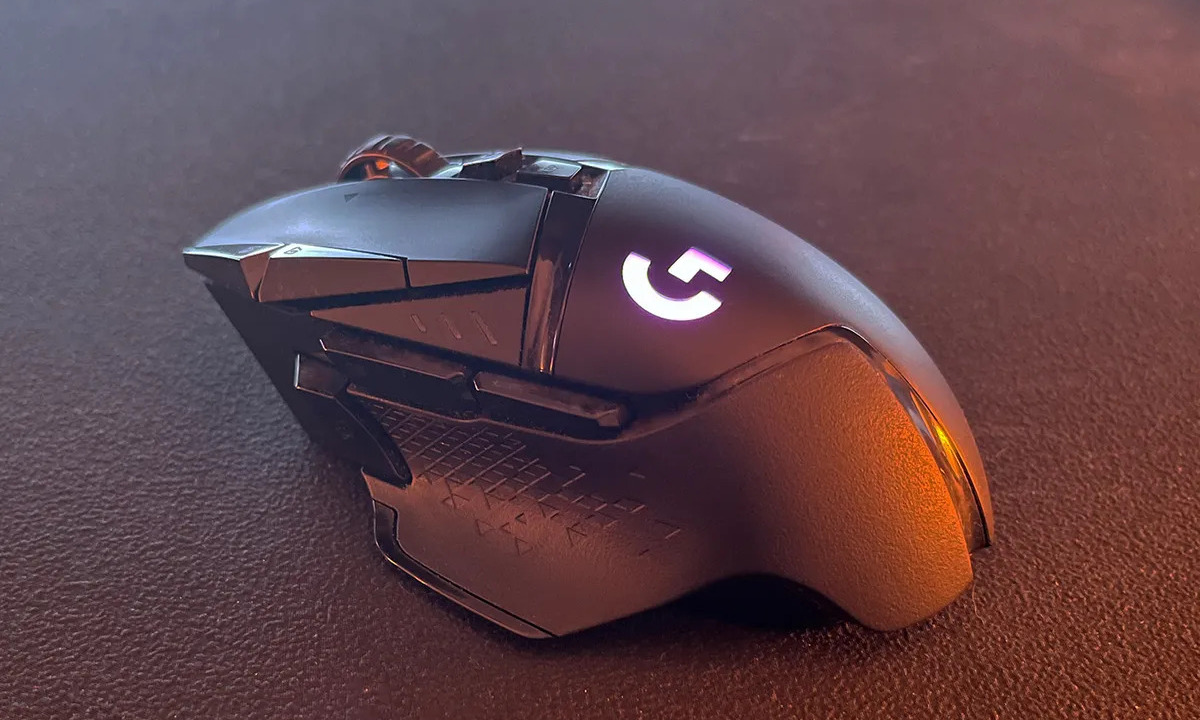
A rapid fire macro on the Logitech G502 is a single button assignment that automatically repeats a left-click sequence, letting you fire semi-automatic weapons as fast as the macro runs without manually clicking each shot. This rapid fire macro Logitech g502 setup turns one physical press into a controlled burst of clicks, giving you a consistent fire rate that’s especially useful in shooters where trigger speed matters. If you need a continuous stream of clicks without holding the button, you can set up auto clicker Logitech instead.
What is a rapid fire macro on Logitech G502?
A rapid fire macro on the Logitech G502 is a pre-recorded sequence of left-click actions assigned to one mouse button, so holding that button triggers repeated clicks automatically instead of requiring you to tap the physical button each time.
How to create a rapid fire macro in Logitech G HUB
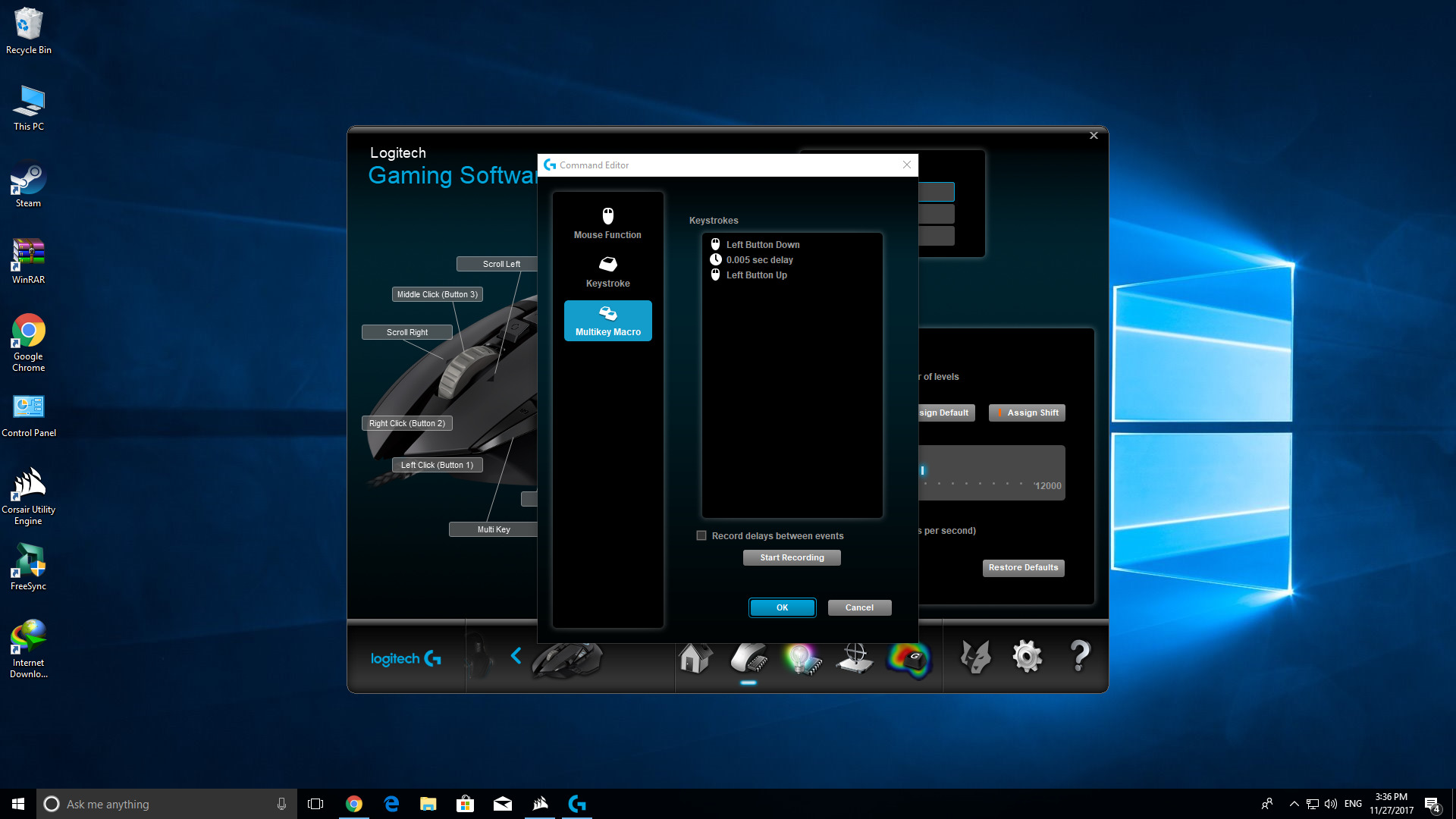
Open Logitech G HUB and select your G502 from the home screen. Click the Assignments tab on the left sidebar, then choose the button you want to customize. In the assignment panel, select Macro to open the macro editor. Click Record, then rapidly click the left mouse button several times to capture the click sequence. Stop the recording, and then find the Macro Type dropdown, this is the critical step. Change it from the default option to Repeat While Holding, which makes the macro loop your recorded clicks continuously as long as you keep the assigned button pressed.
- Launch Logitech G HUB and click your G502 in the device list.
- Open the Assignments tab and pick a button to customize.
- Select Macro from the assignment options.
- Press Record and click the left button several times to create the sequence.
- Stop recording, then set the macro type to Repeat While Holding.
The delay between your recorded clicks becomes the macro’s fire rate. If you want a faster burst, record with shorter pauses between clicks; for a slower, more controlled rate, leave longer gaps. You can also edit the recorded delay later by dragging the timing bars in the macro editor.
Assigning the macro to a G502 button
After saving the macro, drag it from the macro list onto the button you selected earlier. The G502’s side thumb buttons are the most natural choice for rapid fire because they sit under your thumb and don’t interfere with your aim or movement. G HUB shows a visual map of the mouse, so you can see exactly which button you’re assigning. If you change your mind, simply drag a different assignment onto the same button or right-click it to clear the macro.
For the best experience, assign the rapid fire macro to a button you can hold comfortably while keeping your index finger on the left click for other actions. The two thumb buttons on the left side of the G502 are ideal because they’re easy to press without shifting your grip.
Saving the macro to onboard memory
The G502 stores up to five profiles in its onboard memory, which means your rapid fire macro works on any PC even without G HUB running, though you can customize three onboard profiles for button programming, lighting, and tracking behavior. To enable this, open G HUB’s settings and switch the mouse to Onboard Memory mode. Once you’ve assigned the macro to a button while in this mode, the profile is saved directly to the mouse’s internal storage. You can then unplug the mouse, plug it into another computer, and the rapid fire macro will still function exactly as configured.
Keep in mind that while onboard profiles retain your macro assignments, full customization, like editing delays or recording new sequences, still requires G HUB. The onboard memory is for carrying your saved profiles, not for making changes on the fly.
Testing and adjusting your rapid fire macro
Enter a practice range or a single-player area in your game where you can safely test the macro. Hold the assigned button and watch how the clicks register. If the fire rate feels too slow or too fast, return to G HUB’s macro editor and adjust the delay between clicks. For semi-automatic rifles in most shooters, you’ll want a delay that matches the weapon’s maximum fire rate, too fast and the game may skip shots, too slow and you lose DPS.
Test with different weapons because each has a different fire cap. A macro that works perfectly for one rifle might be too fast for another, causing missed inputs. Adjust the delay in small increments, usually a few milliseconds, and retest after each change. Also check that the macro stops cleanly when you release the button; if it continues firing, the Repeat While Holding setting wasn’t applied correctly.
Tips for using your G502 macro responsibly
Before using your rapid fire macro in online matches, check the game’s rules and anti-cheat policies. Many competitive shooters prohibit macros that automate firing, and using them can result in account penalties or bans. Even in games where macros are allowed, avoid overusing rapid fire in ranked modes, it can be seen as unfair by other players and may draw reports. Use the macro for single-player campaigns, practice ranges, or games that explicitly permit scripting, and keep your manual clicking sharp for competitive play.
For the wider topic, see programming gaming mouse buttons and macros.
\nRelated reading: How To Turn On Angle Snapping Logitech.