





Before we start exploring this fascinating field, it is important to get an overview of robotics programming and give ideas to the newbies as well.
The reason why robotics is growing so rapidly is quite explicit. It happens to be a mixture of all the top fields, including computer science, engineering, bioengineering, mechatronics, AI, nanotechnology, and some others.
The term “robotics” simply refers to the study of robots. These are machines designed to work in human capacity and execute some very specific tasks. Before, robots were unable to make decisions as their program was just to perform binary operations. But now, they are brimming with Artificial Intelligence, Machine Learning, and whatnot. They may be able to analyze the scenario, take appropriate decisions, learn from the outcome, and then make even better choices in the future.
Why Robotics Programming Is A Lucrative Field
These days, the competition is quite strong. People do not get paid for sitting in an office only. In fact, the more you add value to the organization, the more you get paid.
The situation begs a question. How do you add value? Well, by possessing skills.
So it all comes down to one thing – your skill gets paid!
Since robotics programming is loaded with chunks from an array of fields, most of the candidates possess a great deal of knowledge and are skillful in multiple domains. As a result, companies tend to pay more to the ideal candidate.
But there is more to this field. Since the robotics niche is growing exponentially, there is a great deal of funding in the market, and venture capitalists are always eager to explore unique use cases. Therefore, if you have a rational idea, you may find decent funding.
List Of Top Robotics Programming Languages
In this section, we will explore several programming languages powering the robotic industry. Please note that the list does not depict any preference.
1. LISP
After Fortran, LISP happens to be World’s oldest programming language. For some senior developers, it is an incredibly reliable option. Although it is not extensively used in modern technologies, some of the conventional robots depend on LISP to show their extraordinary working.
If you are still curious about knowing its importance in the AI niche, please note that LISP is one of the languages of the Robotic Operating System. However, to use this particular OS, you don’t need to learn LISP since it is only a part of the overall system.
2. C And C++
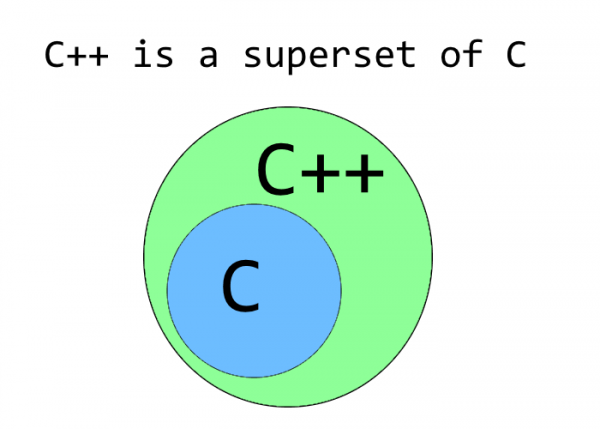
Every engineering program in the World requires you to clear the C/C++ course. The reason is understandable. C happens to be one of the most mature languages in the industry and is used quite extensively in robotics programming as well. Despite being an older technology, it is still an ideal choice when it comes to hardware. Moreover, several programmers find C/C++ as their best bet for performance optimization.
If you are trying to enter the niche, I advise you to give C/C++ a try and get acquainted with some of its vital libraries related to robotics. You won’t find it difficult to understand because of the user-friendly and easy syntax.
Please note that C#, maintained by Microsoft, might also come in handy for robotics programming. In the long run, you might want to use Microsoft’s RDS for advanced development, and it is based on C#. However, as a piece of friendly advice, I would suggest you understand the basics of C and C++ first.
3. Python
It has experienced a major boost in the last couple of years. Let it be AI, ML, robotics, data science, or any other field, Python has proven its significance. Despite being relatively newer than LISP and others, it was one of the three programming languages for the Robotics Operating System.
Moreover, the prime focus of Python is to facilitate user-friendliness and allow efficiency in the development process. While it wasted a major portion of time in declaring, defining, and casting different variables, Python goes about it and gets rid of all such time-consuming processes.
It is loaded with a plethora of built-in and 3rd party libraries. You do not have to (extensively) write algorithms for some core features.
If you have experienced in robot programming, you must be aware that cross-compatibility is the main thing lacking in the industry. However, Python provides a decent solution in this regard. Additionally, it allows seamless binding with C and C++, hence facilitating efficiency in performance-oriented tasks.
4. Java
When it comes to java programming, it covers all the necessary features required in the robotics industry. These days, robots are not just used for pressing a button instead of a human. There is a variety of aspects tied to their overall operations.
In such a complicated business, Java can help programmers a great deal to create search and neural algorithms and work in the field of natural processing as well. This is one of the primary reasons as to why some computer science and engineering-related degrees often have Java as their fundamental requirement. Moreover, since it happens to be one of the most stable and widely used languages, cross-compatibility is phenomenal.
5. Basic And Pascal
Once again, these are two of the oldest languages used in robotics programming. As the name suggests, the aim of Basic is to lace up the beginners with essential skills. It is incredibly easy to learn and is quite simple as well.
Talking about Pascal, one of its core objectives is to empower robust programming practices. Therefore, while basic is pretty “basic,” Pascal is what takes you to the next level and enables you to use pointers, etc.
Let’s get our facts right – both of these languages are outdated for most of the programmers. However, since they were one of the initial ones in the niche, you might want to have a little overview about them to understand some older robots in the industry.
6. MATLAB
Just like most of the popular robotics programming languages, MATLAB is open-source. It is used quite extensively (although there are better options). The main purpose of using this language is to analyze the data generated by the robot and then build a control system around it.
It is also said that some of the programmers developed an entire robot by using MATLAB only (we do not know the scope of those machines). If you are looking for analysis, generation, and utility of data, then MATLAB could be a pretty good option.
7. HDL
The above-mentioned languages provide a great deal of abstraction in robotics programming, or any other field for that matter. However, Hardware Description Language is meant to code/program the low-level logic of the machine. Therefore, the entire architecture depends upon the HDL.
Let it be the design of circuits, chips, or their combination, HDL controls everything. It also offers a hardware simulator. This allows the programmers to determine the behavior of the circuit before finalizing it and taking it to the production phase.
There are plenty of HDLs in the market. You could learn any of them (although they are not high in demand). However, Verilog and SystemC are two of the latest ones.
Please note that apart from just programming knowledge, you must have a strong background in electronics. This is to ensure that you understand what’s happening at the very core.
8. Assembly
While you are coding in modern languages, you have no idea about what is “really” happening in the machine. This is a major drawback of abstraction, particularly if you need some low-level changes.
This is where assembly comes into play and aids the developer in interacting with 0s and 1s. Two decades ago, programmers who were willing to control the electronic configuration of a machine had a fairly hard time doing so with Assembly. But with the advancement in technology, we now have microprocessors running on C/C++ allowing the same feasibility.
Coding Languages: Leading The Way To Robotics Programming
All of the above-mentioned robotics programming languages are good. Moreover, we cannot ignore the fact that the industry is evolving. Besides, the scope of the tasks that a robot can perform is also expanding. Many robotic organizations find it convenient to create a custom programming language. This is to ensure the efficiency of their use cases.
Therefore, even if you learn all of these languages, you might have to learn a new language from scratch to work on a specific robot. However, it only happens with tier-1 robots. If you are dealing with any ordinary one, these languages would be sufficient to aid you in robot programming.