





A lot of game series seems to have made a return as of late. God of War came back with a vengeance last 2018, Final Fantasy 7 got a cool remake, and Devil May Cry 5 is just straight fire. However, a beloved franchise is slated to make a return this year and that’s Saints Row with a 2022 reboot coming soon. However, there seems to be some trouble in paradise between Saints Row fans and the developers. We’ll talk about why this is the case later. But for now, to add context, let’s talk about the Saints Row series first.
What Is Saints Row?
The Saints Row series follows the 3rd Street Saints, a gang that operates in the Saints Row district, which is where the name of their gang comes from. In the Saints Row games, the gameplay is focused on an expansive open world where the player can go anywhere they wish. However, there are several story quests and missions that need to be done to progress the story. The player also has several side activities that they can do to get additional cash or increase their reputation in the game’s world. Usually, these revolve around killing rivals, taking territory, or other mobster stuff.
The game is centered on a player-created character that joined the 3rd Street Saints by complete chance. Through guile, a lot of guns, killing, and gang management, they eventually rise to the top of the 3rd Street Saints and become its boss, eventually becoming an in-world pop icon and even president of the US. The first four games of the series, Saints Row 1 to 4, were set in two cities known as Stilwater and Steelport. These cities are loosely based on several cities in the US.
However, the earlier entries of the game were seen as Grand Theft Auto clones, and thus, the developers decided to make the game more distinctive in terms of gameplay. This involved adding in even more over-the-top shenanigans, additional homages to pop culture, a boatload of humor, and parodies galore.
However, these additions to Saints Row were seen as pretty bad by a lot of fans of the two original games. So much so that there’s a lot of division in the fanbase on Saints Row 3 and 4 as well as the game’s various expansions.
Enough about them, though — let’s talk about the reboot.
What Is Saints Row 2022?
Saints Row 2022 is an upcoming open-world action-adventure sandbox game set in the Saints Row universe. It’s also a reboot of the first games in the Saints Row series.
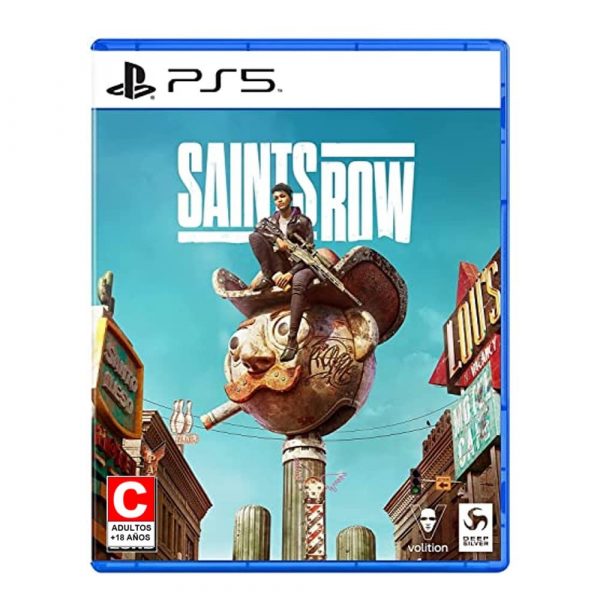
Created by Volition, the game is going to be released by Deep Silver on August 23, 2022. The game will be available on PC, PS4, PS5, Xbox One, and Xbox Series X/S.
Saints Row 2022 Reboot Preview
What can we expect from this new Saints Row reboot? Should you be excited? Let’s find out.
Story
The Saints Row 2022 Reboot is set in Santo Ileso, a region located in southwest America. Fictional, of course. The player, aka the Boss, has three main friends in the game, each with their own story and their past. In addition, all three friends were once a member of the three main gangs on Santo Ileso.
All 3 of the Boss’ friends have their reasons for joining one of the gangs in Santo Ileso. Neenah studied art and history and wanted a job in a museum in Santo Ileso. However, that didn’t pan out, and she had to become a mechanic to make ends meet. Eventually, she became part of the Los Panteros. Meanwhile, Kevin is a DJ whose one goal in life is to make other people happy. While growing up in foster care, he was aimless and wanted somewhere to belong. Thus, he joined the Idols.
And lastly, we have Eli, a graduate of MBA who went to Santo Ileso to establish his own business. To pass the time, so to speak, he joined Marshall Defense Industries, a sort of paramilitary defense force for one of the companies in Santo Ileso. It’s not a gang, but it might as well be one due to how much control they hold in their area of Santo Ileso.
Thing is, all three of the Boss’ friends aren’t that enthused with their current circumstances. And so, with the Boss’ help, they decided to start up their gang, the Saints, and fight their way to prominence in Santo Ileso. They’ll either crash and burn, or rise and become legends, and if the player is interested, they can see where this will lead when the game releases.
For now, though, let’s talk about Santo Ileso’s gangs for a bit.
Los Panteros
The Los Panteros is probably the earliest gang that the Boss will interact with on the Saints Row Reboot, and they’re the typical gearheads. They respect mechanical skill, power, and tradition, while still respecting family and bond over really, really fast vehicles. The Los Panteros have most of their territory in the Rancho Provedencia district. And if we’re being fair here, the fact that a huge panther rock formation is on the neighborhood’s horizon is a striking image.
The Los Panteros has their members on a lot of classic muscle cars, each of them tuned and modified to become engines of speed and destruction. In addition to this, the Los Panteros usually use melee weaponry in fights even though guns are in vogue on Santo Ileso. These mean sledgehammers, crowbars, the occasional switchblade, et cetera. There are people in the gang that use guns, but they’re few and far between. Expect more guns on the Idols or the Marshall Defense Industries.
Anyhow, as stated, Neenah used to be part of the Los Panteros. Because of this, her expertise in both cars and how the gang operates is a necessity against them. Overall, the Las Panteros are the kind of guys that will go on a gunfight with melee weaponry but don’t let that deceive you. They’re tough, hardy, and know what they’re doing. Also, Santo Ileso is where a popular muscle car manufacturer in the Saints Row series originated, AKA Scorpion. Los Panteros has one of its bases on an abandoned manufacturing factory of theirs, so it’ll be fun to see if it has any references.
The Idols
Next on the list are the Idols, the gang that Kevin, the Saints member who’s constantly not in a shirt, started on. Although it’s not fair to call the Idols a gang, it’s more of a cult following. For those that wonder who they are, they’re a pretty obvious sight when they’re seen. They always look like they came out of a neon convention, with bright colors, LED helmets, glowing paint on their clothes, et cetera. You can see them from a mile away with that getup.
Think of them as a desert rave turned gang turned cult, and you’ll have a good idea of what their operations are like. Due to the popularity of the group, they’re the one with the most manpower among the three factions, to the point that their sheer numbers are their standout feature. Their main objective is to swarm the enemy with bodies until the enemy submits or they’re repulsed, like a Zergling Rusher from Starcraft.
When fighting the Idols, expect it to take a while. After all, these guys not only zerg rush, but they also have guns. They may come out of anywhere possible, and it’s only when everyone’s unconscious or painfully on the ground that the Idols will stop. Combine this with some pretty unique weaponry and some “maybe high tech, maybe magic” shenanigans, and you have an annoyance to deal with. Also, LED whips that can deflect gunfire. Just the statement alone would be enough to annoy even a hardened veteran.
Marshall Defense Industries
Last but not least are Marshall Defense Industries, and these guys are the wealthiest of the three factions in Santo Ileso, and it shows. The reach of this gang — if you’re controlling vast swathes of a city’s land while totting around that much firepower, you’re a gang — is far and wide. It is possibly the widest amongst the three factions in the game. They tot the white and blue as if they’re the police force and strike with tactical precision. They also have a cowboy aesthetic, with their main base of operations on the Lakeshore district, the home of Santo Ileso’s wealthy elite.
As stated, Eli used to be a member of Marshall Defense Industries while he was building up capital for his new business. What isn’t clear is the fact that there are some hints by the developers that the Boss himself used to be a member of Marshall as well. This is more rumor than anything else, but we might be seeing more of this on the game’s character creation. It is somewhat like in Cyberpunk 2077 where the player chooses their origin before moving into Night City, but we digress.
Amongst the three factions of Santo Ileso, Marshall is the one that sports the most tech. They have lasers, lots of them, and they’re more militaristic compared to the other factions. Marshall does surgical strikes and doesn’t mess around when fighting and will try to kill the player with things like precision rifles and laser lassos. They also have special gadgets that they can bring to bear on the player as well, though we don’t have much information about them yet.
Graphics
In terms of Graphics, The Saints Row Reboot is a bit of a mixture. A mix between the grounded seriousness of 1 and 2, combined with the silliness of 3 and 4. This didn’t endear itself that much between the fans of the 4 previous games. Some hated the fact that the graphics look a bit cartoony. Others don’t like it that some of the more ridiculous stuff on 3 and 4 wouldn’t be in the game. All in all, the reboot hasn’t pleased any of the game’s fans, and that’s quite sad.
Overall, the Saints Row Reboot looks pretty OK graphically. But because it seems to try to straddle the line between seriousness and silliness is probably what alienates it from the game’s fans in addition to the characters. We’ll talk more about those issues in a later part of the article.
Character Creation
There hasn’t been any definite showing of the character creation on the new Saints Row Reboot yet. However, we do have a few snippets of information that seems to err on the positive side of things. The Saints Row Reboot is said to have the gender spectrum feature that originated from Saints Row 2. This allows players to make The Boss of their image, and it’s not limited to the gender that they chose for the boss.
This essentially means that in character customization, the sky’s the limit, and there’s nothing sacred. Players can customize not only their faces, but also their hair, their build, their facial hair, and maybe even specific stuff like adding in various tattoos on areas of the body. All these things are possible in the cards for the Saints Row Reboot, and we’re all in for it.
The developers also made some hints that the wilder aspects of the character creation on the third and fourth entries of Saints Row might also return. Another thing that would be a good addition to the game in general. Hopefully, these promises will be kept when the game releases this August, but hope springs eternal and all that.
Gameplay
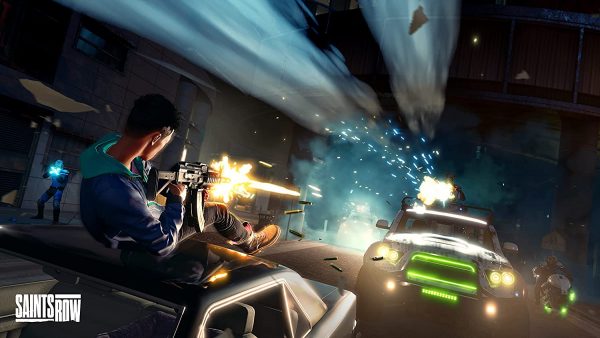
There’s quite a bit of gameplay that was shown on the Saints Row Reboot trailers. For one, the usual gunplay and melee combat that was on previous Saints Row games are sort of retained. The game has a few things that we’ll need to talk about specifically though, and we’ll first start with the Wingsuit.
Wingsuit
The Wingsuit is one of the tools The Boss will have on the Saints Row Reboot. If you’ve played the Just Cause games, then you’re in for a treat, as it’s pretty responsive and has a lot of air-time when used correctly. When fast-traveling, the game gives players the option of starting on the ground or in the air with the wingsuit, so that’s convenient. The wingsuit’s maneuverability is also pretty high as the Boss was able to dodge bullets from a flying helicopter with it.
There are also special areas in the world where the player can jump off and get significant air-time with the wingsuit. Of course, they can also just drop off a high rise to use it, but the option is there for players to make use of.
Criminal Ventures
One thing that is an interesting addition to the Saints Row Reboot is the various Criminal Ventures. On Santo Ileso, there are areas that the Saints can purchase to then create business fronts for their criminal enterprise. What these businesses will look like is up for the player, but we can already guess a few of them: Insurance Fraud, Money Laundering, and maybe a few hints of cabaret here and there.
All in all, getting all the Criminal Ventures up and running will be a good way to get the money needed. This is essential in elevating the Saints to greater heights. There might also be missions where the Boss needs to defend these ventures from the reprisals of the warring gangs. Hopefully, there are going to be raids on these Criminal Ventures where the gangs will try to take them from the Saints — thereby adding more flavor to the gang warfare of Santo Ilesos.
Car Combat Revamps
Next on the list are the car combat revamps, and there’s quite a bit of them here, specifically 3. The first one is the ability to climb on the top of the car the player’s driving, allowing them more range and area to fire their gun. Do note that on a single player, the driver, AKA the player, would be the one climbing the top of the car. Meaning no one’s driving it. Meaning you’ll slow down.
Next on the list is the ability to sideswipe enemy cars for massive damage. Each of the enemy cars now has an HP bar for both the people inside and for the car itself. The player can then choose whether to shoot the people inside or just slam their current car into the enemy’s to force them off the road.
And last is the Tethering mechanic. This allows you to tether anything to the back of your vehicle to do massive damage. Once tethered, the player can then drive their vehicle of choice while the object strapped behind it makes its best impression of a wrecking ball. This not only causes a lot of destruction but can be useful in certain missions where wanton wreckage is needed to succeed.
One thing to keep in mind is that helicopters are a thing in this game, the player can use them, and the Tethering mechanic works with them as well. Have fun doing shenanigans with them later.
Sound Design
One thing that we can’t take away from Volition is the fact that they can choose their soundtracks pretty well. The trailer music hearkens back from the previous Saints Row games, and in fact, sounds like something that’ll play on the 1st game’s menu. Shut ‘Em Up is a really good choice for it. Hopefully, the soundtrack can follow after this banger will prove to be a great pick for the game.
Other than this, the Saints Row Reboot does sound pretty good when playing. The guns sound great when firing, and there are a lot of cool sounds effects when the player does something. This is evident with explosions in-game. Overall, no complaints on the Sound Design side of things yet, and hopefully that won’t change when the game releases this August.
How the 2022 Reboot Compares to Older Saints Row Games
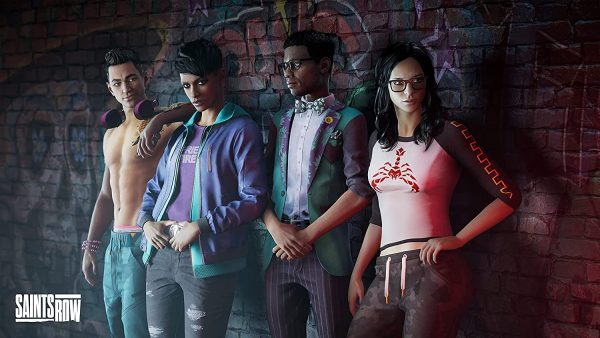
First off, the obvious change in the Saints Row Reboot has to be the characters. We no longer have the original Saints and instead have a new cast of characters. We no longer have Shaundi, Johnny Gat, or any of the old Saints. Instead, we have the new Saints, and some people didn’t like that at all. Other than this, the game does state that they want to dial down the wackiness on the last Saints Row games. WHich is polarizing to loyal fans of the past games.
For now, though, we can only hope that the game will be worth the wait. The game does have some things going for it. However, it’s not going to be easy for the developers to show that given the outrage on the current Saints.
Saints Row 2022 Reboot vs Similar Games
Now that we’ve talked a bit about the Saints Row 2022 Reboot, let’s talk about other similar games. We’ll start with the GTA Series, followed by the Yakuza Series, and lastly, the Just Cause Series.
Grand Theft Auto Series
Saints Row used to be called a clone of the GTA Series and for a good reason. The game looks like a wackier GTA with a lot of supernatural and technological shenanigans. Nowadays, there hasn’t been that much of a reason to compare the GTA Series with Saints Row due to how nutty Saints Row can get. But there’s still a lot of similarity between the gameplay of Saints Row and the GTA Series.
Yakuza Series
Next on the list is the Yakuza series. Yakuza made its way here due to how bizarre and insane the fights can get. They range from normal fistfights to outright doing finishing moves and dealing massive damage to both lives and property. It’s great fun overall. However, the game’s main reason for being on this list is due to the number of side activities the player can get into. Ranging from owning a Cabaret Bar, Karaoke singing, pocket circuit racing, managing a bar, and bowling. Yes, bowling. Truly the Yakuza series is a gift.
Just Cause Series
Last but not least is the Just Cause Series. In Just Cause, it’s not enough to just kill your enemies. The player also needs to destroy their facilities while taking everything that isn’t nailed down. If you’re not flying through the air with your wingsuit while tearing apart cars and other breakables with the grappling hook, you’re not having fun. And on Just Cause, fun is the name of the game.
Verdict: Is Saints Row 2022 Remake Worth Waiting For?
The Saints Row 2022 reboot has a few things going for it, don’t get us wrong. The game looks fun, there’s a lot of stuff to do. The Criminal Enterprises seems like a fun way to expand the Saints’ influence. Plus, the chaos the player can do seems enormous. But the new characters don’t seem to have the charm that the old Saints have. This might be a deal-breaker for some people. Waiting for a definite review of the game might be a good idea before splurging the AAA price for it.